 Volume 40 No 6 - June 2026
 Volume 40 No 5 - May 2026
 Volume 40 No 4 - April 2026
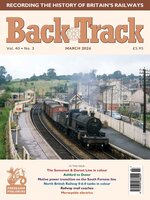 Volume 40 No 3 - March 2026
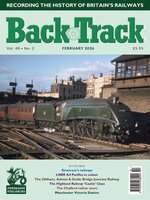 Volume 40 No 2 - February 2026
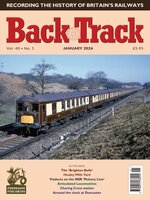 Volume 40 No 1 - January 2026
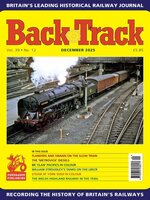 Volume 39 No 12 - December 2025
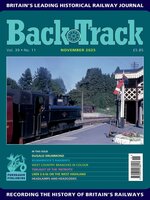 Volume 39 No 11 - November 2025
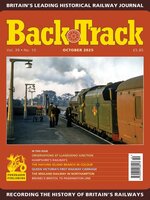 Volume 39 No 10 - October 2025
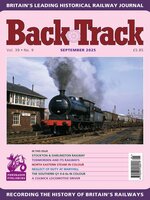 Volume 39 No 9 - September 2025
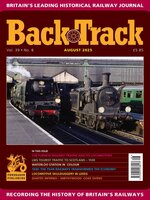 Volume 39 No 8 - August 2025
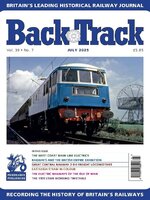 Volume 39 No 7 - July 2025
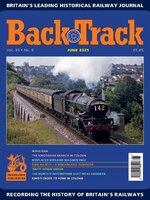 Volume 39 No 6 - June 2025
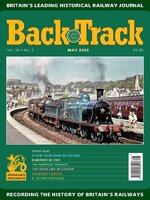 Volume 39 No 5 - May 2025
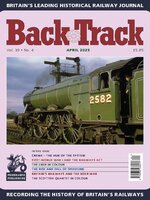 Volume 39 No 4 - April 2025
 Volume 39 No 3 - March 2025
 Volume 39 No 2 - February 2025
 Volume 39 No 1 - January 2025
 Volume 38 No 12 - December 2024
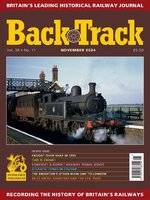 Volume 38 No 11 - November 2024
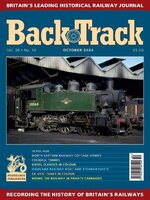 Volume 38 No 10 - October 2024
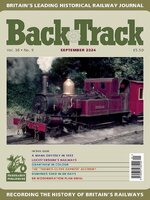 Volume 38 No 9 - September 2024
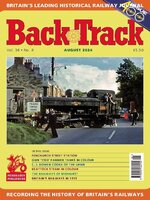 Volume 38 No 8 - August 2024
 Volume 38 No 7 - July 2024
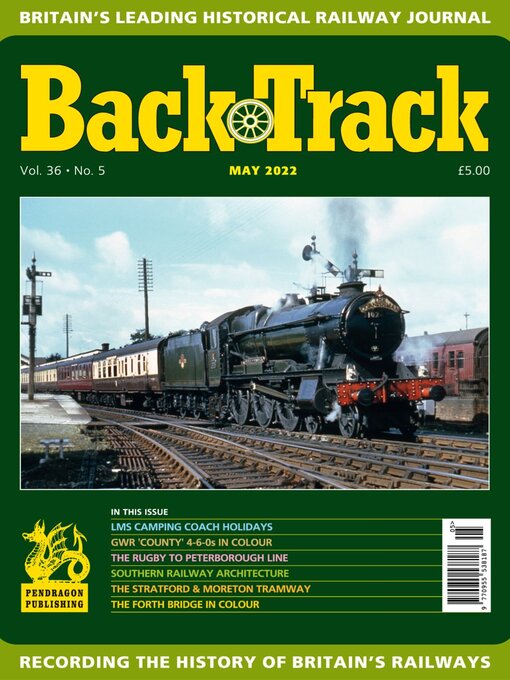
Backtrack, Britain's Leading Historical Railway Journal, covers all aspects of railway history from its earliest days through to more recent events up to around ten years before now including, early railway history from the 'pre-Stephenson' era, steam, diesel and electric locomotive history, railway company history, railway carriages and wagons, railway stations, railway ships, hotels & road vehicles, railway economic and social history, railway publicity and advertising. Backtrack's contributors include many of today's leading railway history writers. From the beginning the magazine has maintained a reputation for its production values and each issue contains a wealth of photographs reproduced to the highest standards, including a generous selection of historic colour. Published monthly, Backtrack is THE magazine for all who are interested in British railway history.
Nationalisation didn’t stand a chance
Backtrack
WORKING THE WENSLEYDALE STONE • The Wensleydale branch, heading west from Northallerton on the East Coast Main Line, was opened in stages from 1848 until eventually joining the Settle-Carlisle route at Garsdale in 1878. Most of the branch closed to passengers in 1954 apart from the Garsdale-Hawes link which lasted until 1959. Until 1992 limestone traffic from Redmire to the Teesside steel industry ensured the line’s continued survival after which the heritage Wensleydale Railway took it over, though the occasion transport of military vehicles for the Ministry of Defence in connection with the Catterick garrison continues as required. These photographs of the limestone trains were taken in 1989 by KEITH DUNGATE
FROM RUGBY TO PETERBOROUGH THE HEYDAY AND DEMISE OF A CROSS-COUNTRY ROUTE
LONDON MIDLAND & SCOTTISH – THE CAMPING COACH BEHEMOTH • MIKE FENTON chronicles the history of the London Midland & Scottish Railway’s Camping Coach Scheme in this third instalment of our series on the Big Four’s holiday provision of the 1930s.
A SUPERSEDED IDEA THE FOUR AGES OF THE STRATFORD & MORETON TRAMWAY
THE LNWR’S GLASSON DOCK BRANCH A PROMISE UNFULFILLED
HI-DE-HI HOLIDAYS • Holiday Camps served by train
OUT WITH THE ‘COUNTY’ SET • The Great Western Railway ‘County’ Class 4-6-0s, introduced by F. W. Hawksworth in 1945, were that railway’s most powerful two-cylinder 4-6-0s and may be considered an enlargement of the already successful ‘Halls’, in particular Hawksworth’s ‘Modified Halls’ of 1944. Although never rivalling the status of the ‘Castles’ and ‘Kings’, they were fine performers not least on the demanding routes in the West of England. The ‘Counties’ totalled no more than 30 locomotives, making them perhaps not the most widely photographed of GWR main line classes, but here is a selection at a range of typical locations.
THE CAREER OF JAMES ROBB SCOTT REASSESSING ARCHITECTURAL PRACTICE ON THE SOUTHERN RAILWAY
FROM BARRY TO FINEDON • A piece of family history uncovered by BARRY TAYLOR
BY STANDARD GAUGE TO BLAENAU FFESTINIOG • Blaenau Ffestiniog is best known today as the terminus of the narrow gauge Ffestiniog Railway but access to the Welsh slate capital was also sought by the mighty London & North Western and Great Western Railways. The LNWR was first into Blaenau, its branch from Llandudno Junction opening in stages to 1879. The GWR branch from Bala Junction (on the Ruabon-Barmouth route) to Festiniog opened in 1882, with the narrow gauge Festiniog & Blaenau Railway being purchased and converted to standard gauge the following year. JOHN SPENCER GILKS visited both these branches.
THE BRIDGE HIGH ABOVE THE FORTH • Britain’s most famous railway bridge photographed by GAVIN MORRISON
STRIKES, OVERCROWDING, FISHWIVES AND A ZEPPELIN THE FIRST TWENTY YEARS OF THE NORTH EASTERN RAILWAY’S TYNESIDE ELECTRICS
A...